Strain gauge bridge amplifiers with one measuring channel
8 products
Showing 1 - 8 of 8 products
Strain gauge bridge amplifiers with one measuring channel read one strain gauge full bridge and pass its signal on to a controller, a display or a fieldbus. One device, one measuring point: the load cell, the force transducer or the applied strain gauge sits at the input, and a usable signal comes out.
One measuring channel is not one output
The two terms are often confused, and the confusion leads to ordering mistakes. The measuring channel is the sensor input, that is, the bridge the device reads. The output is the route by which the reading leaves the device.
A single-channel amplifier may well have two outputs. The ESMA puts its one bridge signal onto two galvanically isolated current outputs so that a safety controller can compare the two against each other. If they differ by more than 10 %, the plant is taken to its safe state. That is two outputs for one measuring point, not two measuring points.
Which device for which location
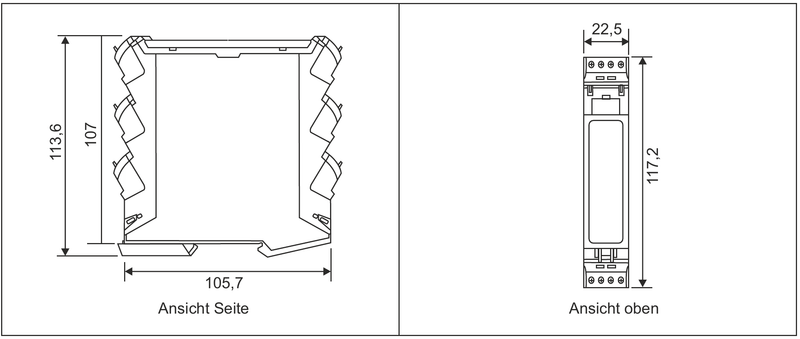
DIN rail in the cabinet
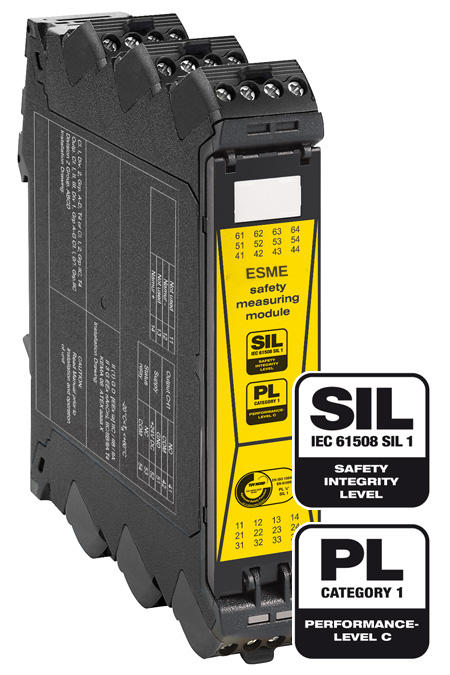
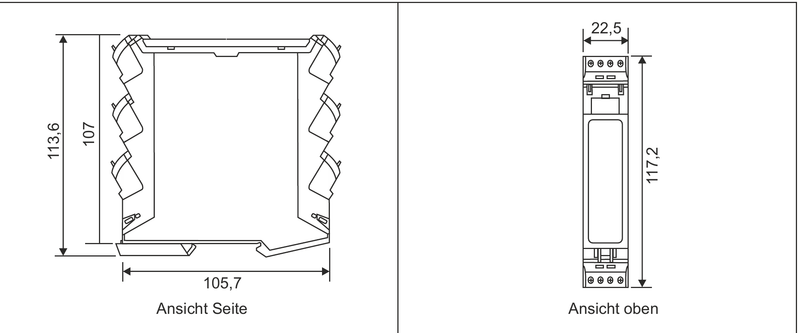
If the electronics sit in a cabinet, the DIN rail housing is the cheapest and most maintenance-friendly form. The ESMA covers the highest safety requirement with SIL3 and PL e category 3 and needs a safety controller to compare its two outputs. The ESME has the protective function built in and reaches SIL1 and PL c without a safety controller, with 24-bit conversion and either 4…20 mA or 0…10 V.
Field housing at the machine
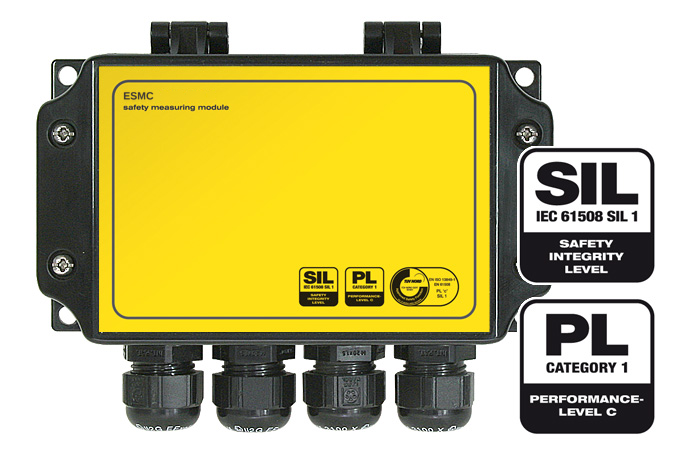
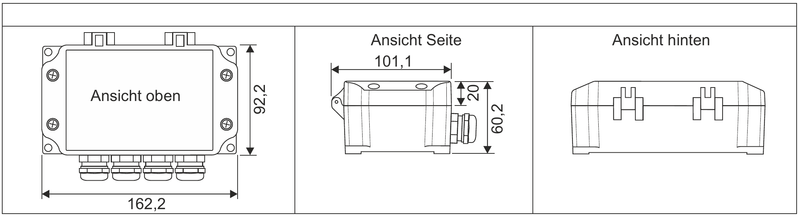
Where there is no cabinet nearby, the amplifier moves to the machine. The ESMC sits in an IP65 field housing, reaches SIL1 and PL c with a built-in protective function and measures to 0.1 % of full scale. The EMLC goes further outdoors: AISI 304 stainless steel housing, protection rating IP67, mounted by cable or via a ¼ GAS connection directly on the load cell housing.
Built into the sensor or into the cable
At 52 × 32.5 × 16 mm the EMLA is small enough to move into a sensor housing or into the cable harness. This is the form for devices that are to be supplied with their evaluation included, without an additional housing taking up space.
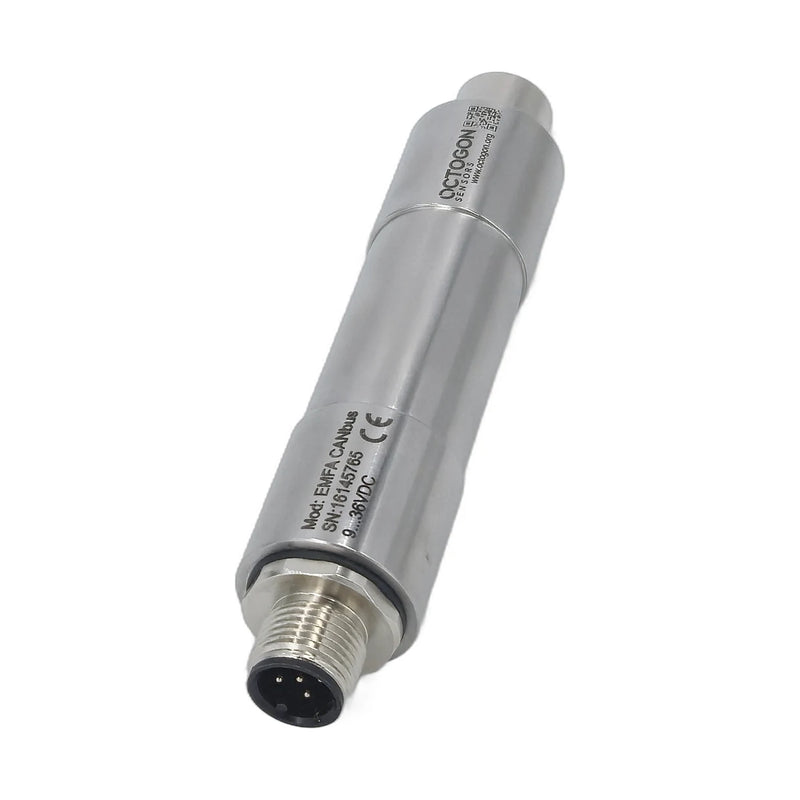
The EMFA is an inline adapter in stainless steel, Ø 21 × 105 mm and IP67, that sits directly in the sensor cable: the load cell at one end, an M12 connector with CANopen or J1939 at the other. This is the form for vehicles and mobile machinery whose controller is on the CAN bus anyway.
Test bench, vehicle and experiment
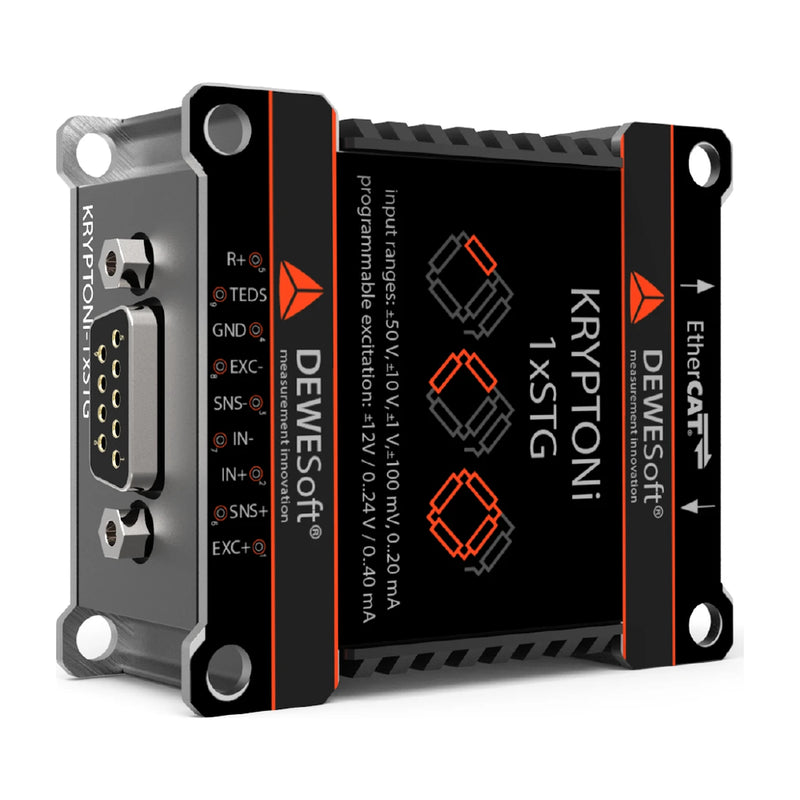
The EMDC is a single measuring channel in an aluminium block machined from solid and potted, IP65 / IP67 from −40 to +85 °C. It takes a full, half or quarter bridge, a voltage or a current, is galvanically isolated and samples with 24 bit at up to 40 kS/s. Over EtherCAT it can be chained time-synchronously with further modules. It is meant for measurements where the curve matters, not just a value for the controller.
Analogue, IO-Link or fieldbus
If the reading goes to an analogue input, 4…20 mA is the robust choice: the current loop is insensitive to interference and a broken wire is recognisable as 0 mA. ESMA, ESMC, ESME and EMLA offer this output.
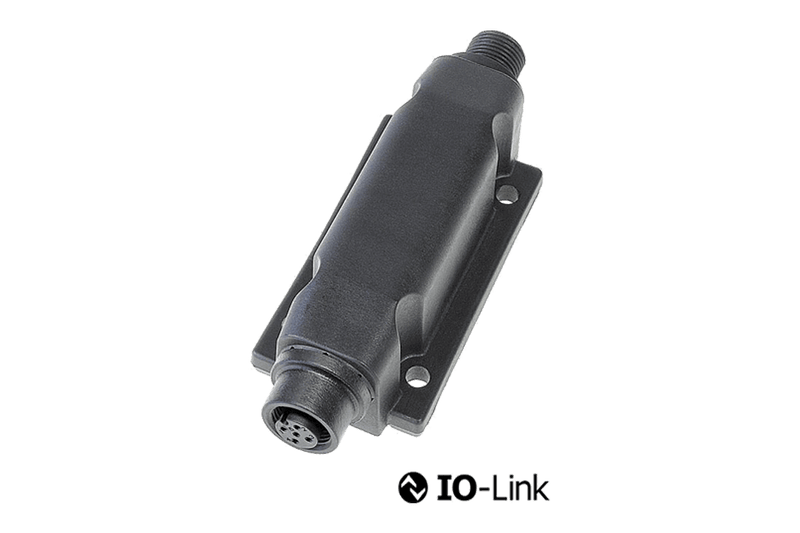
If the device is to speak digitally instead, there are several routes into the controller. The EMMA uses IO-Link and thus carries reading, parameters and diagnostics over the same three-wire cable; the other IO-Link amplifiers sit alongside it. With RS485 and twelve further fieldbus and Ethernet interfaces, the EMLC covers plants that require PROFINET, EtherCAT, CANopen or Modbus/TCP. The EMFA speaks CANopen or J1939, the EMDC EtherCAT.
When one channel is not enough
Several measuring points in one device lead to the bridge amplifiers with several measuring channels. A caution about summing: several load cells in parallel on one input are not multi-channel measurement but a summed weight. The EMLC can run up to four 350 Ω cells in parallel and delivers one value from them.
From strain gauge bonding to a calibrated measuring chain
The amplifier is not an isolated catalogue product here. We apply strain gauges, bonded or welded, on your component, machine spring elements on our own CNC, calibrate the measuring chain to ISO 17025 in our own laboratory and supply the amplifier set up to match. Tell us the sensor, its rated output and the target signal, and the device arrives configured.