Temperature transmitters as OEM boards
4 products
Showing 1 - 4 of 4 products
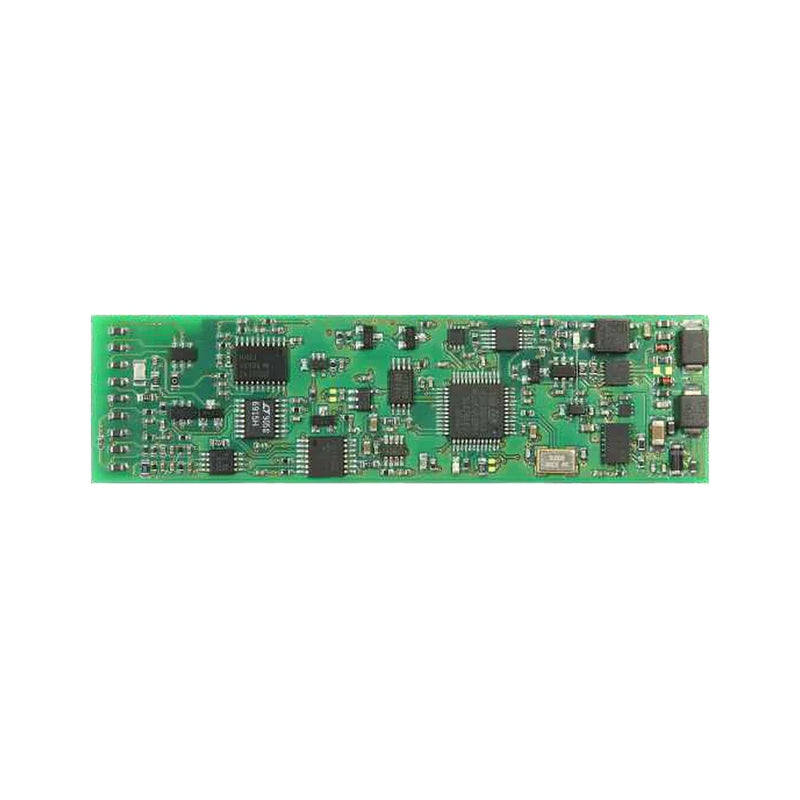
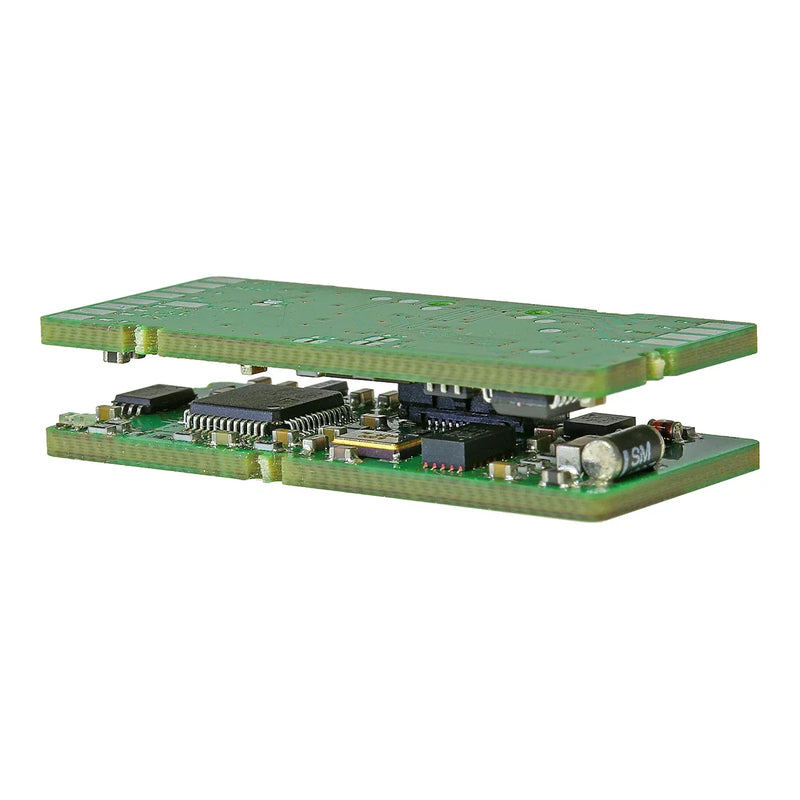
Temperature transmitters as OEM boards, or temperature signal converters as a circuit board, for installation in your device or control cabinet. Two-channel versions for two measuring points or for redundant monitoring, on request with a Performance Level classification and factory-configured for your sensors.
OEM boards for temperature transmitters: two channels on one board
Two-channel versions cover three different tasks, and it is worth clarifying beforehand which of them is yours.
Two measuring points. Supply and return, inlet and outlet, bearing A and bearing B, two zones of a furnace. You need two values, but only one installation space and one power supply.
Differential measurement. If what matters is not the absolute temperature but the difference between two points, for example to determine dissipated power, both channels provide the basis from shared electronics. Because both channels share the same reference and the same aging, this reduces the systematic error compared with two separate devices.
Redundancy. Two sensors at the same point, two channels, one plausibility check. If the values deviate from each other, one sensor is defective, and your device can respond instead of trusting a wrong temperature.
Temperature monitoring as a safety function
As soon as the temperature is not only displayed but used to shut down, the measurement becomes a safety function. Typical cases in mechanical engineering are overtemperature shutdown on motors and gearboxes, bearing monitoring, hydraulic oil, brakes, drying and furnace processes, and charging equipment in electromobility.
For such applications there are versions with a classification to Performance Level and SIL. Two separate channels are the prerequisite for a two-channel architecture with mutual monitoring.
Important for planning: the classification of the assembly is a basis, not a finished assessment. Which level your overall function achieves depends on your architecture, the diagnostic measures and the downstream evaluation. Contact us early and we will supply the figures your safety assessment needs.
Three points that count with two channels
Galvanic isolation between the channels. The most important point when using thermocouples. Many sheathed thermocouples have a measuring junction connected to the sheath and are therefore at the potential of the component they are mounted on. Two non-isolated channels at two differently grounded measuring points then create a ground loop, which shows up as an apparent temperature fluctuation. So before you choose, clarify whether the channels are isolated from each other, and whether your sensors are insulated or grounded to the sheath.
Position of the cold junction. Thermocouples only measure the difference to the connection point, whose temperature the board measures itself. If the assembly sits next to a power supply or a power stage, this reference shifts with the self-heating of your device, and the measurement drifts. The error is then regularly looked for in the sensor.
Measuring current and self-heating. Resistance sensors are operated with a measuring current that heats the sensor minimally. In still air and with small sensors, this is measurable. With two channels with measuring currents active at the same time, it is worth checking the data sheet if tenths of a degree matter.
The general criteria on sensor type, three- and four-wire connection and linearization can be found in the overview OEM boards and amplifier modules.
Factory configuration
On request we supply the boards already set to your sensor type, measuring range and output signal. This eliminates the parameterization step in your production, and repeat orders arrive with the same configuration without further coordination.
The matching sensors can be found in our temperature range. Ordered together, we match sensor and electronics to each other and supply the combination tested. If you need the device finished in a housing instead of as a board, take a look at the temperature transmitters.
When no standard board fits
Different dimensions, other connectors, adapted firmware, additional channels or a combination of temperature and force measurement on one assembly: we adapt existing boards and, if required, develop measuring electronics to your specifications.
Send us the sensor type, measuring range, required output signal, installation space and planned annual quantity, and you will get a concrete proposal.