

Frequently asked questions
PT100 or thermocouple?
A PT100 or PT1000 is more accurate, more stable over time and easier to wire up to a few hundred degrees. A thermocouple reaches considerably higher and responds faster, but is less accurate and needs a reference junction. For process temperatures in plant engineering the resistance sensor is the rule; for furnace, flue gas and melt temperatures the thermocouple.
Two-, three- or four-wire for a resistance sensor?
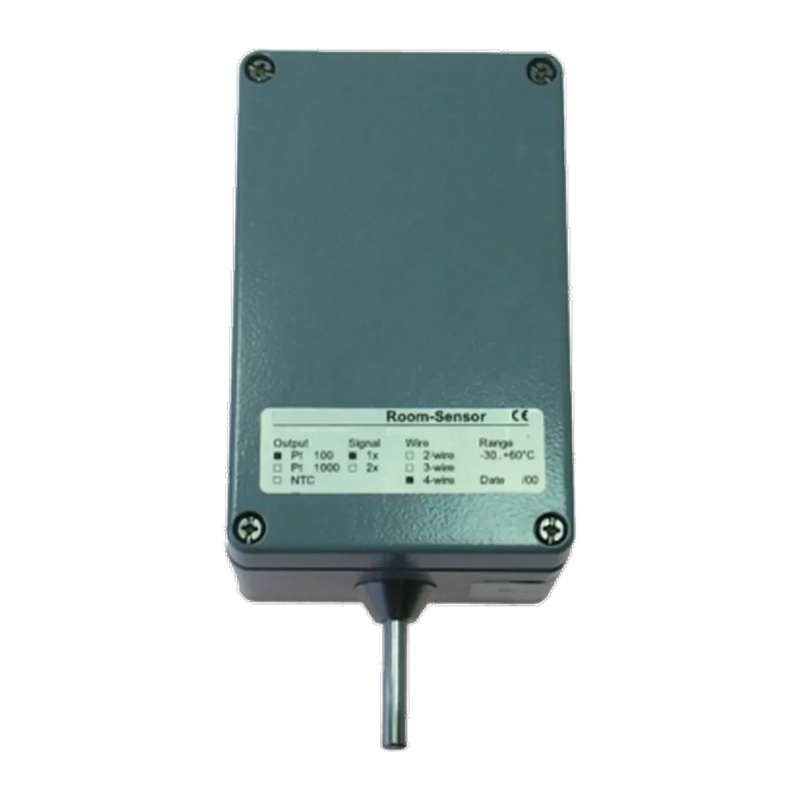
With two wires the resistance of the cable enters the measurement as an error – the longer the cable, the larger the error. Three wires compensate it largely, four wires completely. From a few metres of cable length onwards it should be at least three-wire, and four-wire in the laboratory and wherever high accuracy is required.
How deep does a temperature probe have to be immersed?
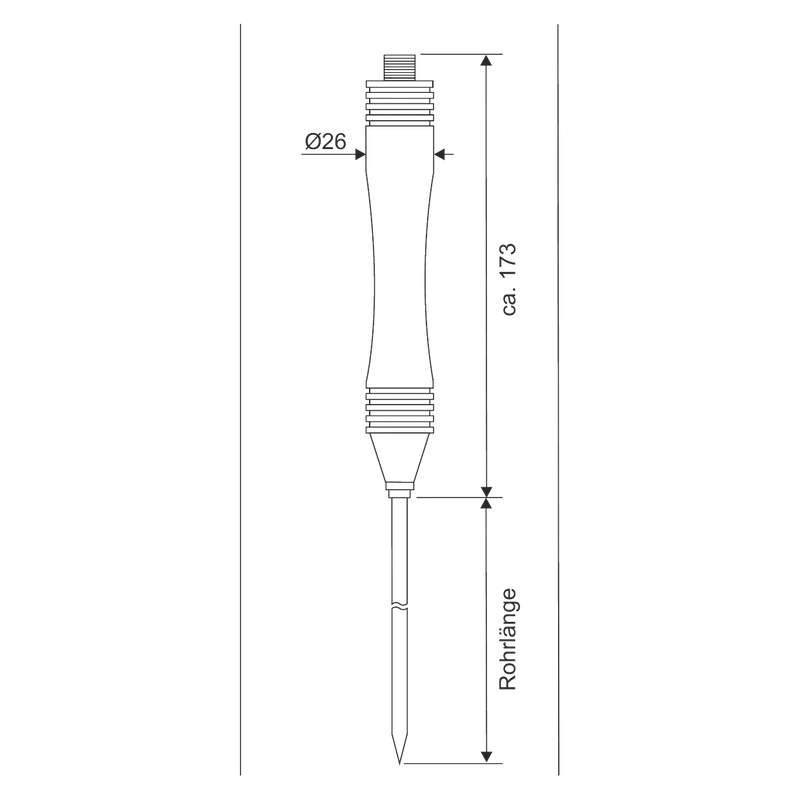
Deep enough that heat conduction along the stem does not distort the measurement; as a rule of thumb about ten times the stem diameter. Immersed too shallowly, the probe shows a mixture of medium and ambient temperature, and the error grows with the temperature difference to the outside.