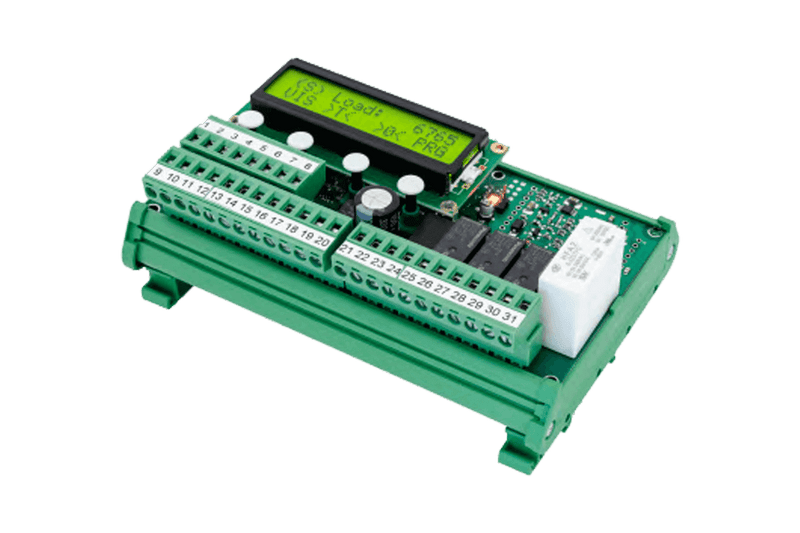
Multi-channel weight transmitters for load cells
3 products
Showing 1 - 3 of 3 products
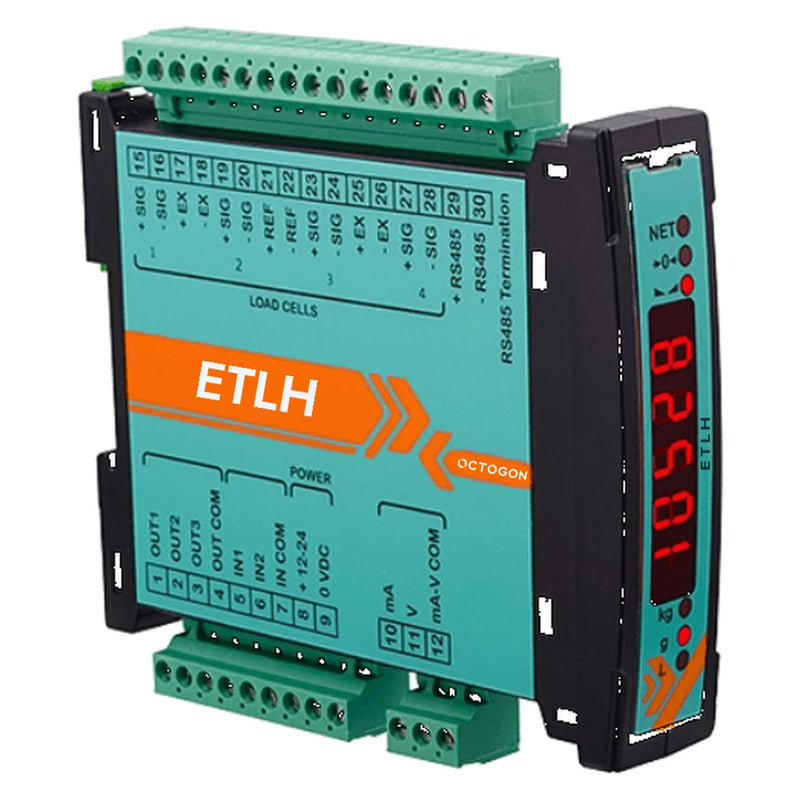
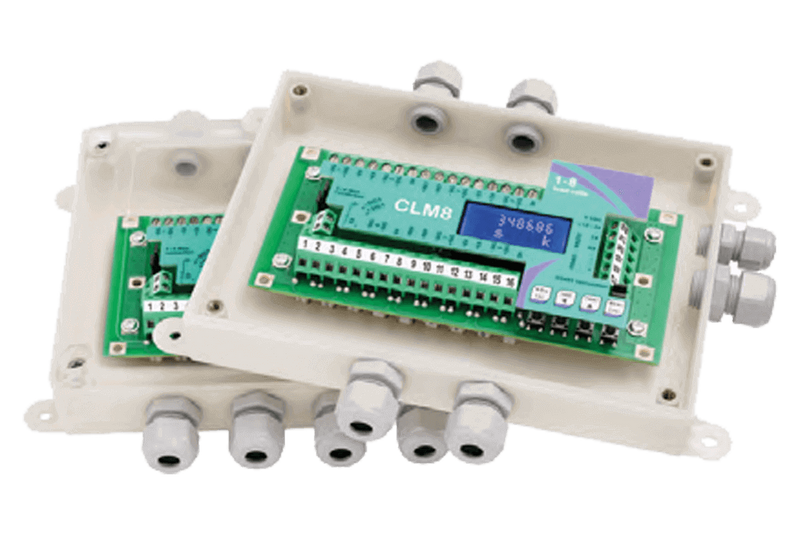
Multi-channel weighing transmitters for load cells read each load cell individually instead of as a sum signal. This allows you to see which cell is drifting or has failed, digitally adjust the corner load, and evaluate several separate weighing points with one device.
Multi-channel weighing transmitters for load cells: The difference in operation
With a summing box, individual cells disappear behind a common signal. As long as everything works, this is not a problem. If a cell fails or slowly drifts, the transmitter only shows that the total weight is no longer correct, but not why. Troubleshooting then means: opening the terminal box, disconnecting individual cells, measuring them, often on a filled silo.
A multi-channel device evaluates each input separately and outputs the values individually. The defective channel is thus identified in seconds. Anyone who records the zero points of the channels over time will recognize a damaged or moisture-damaged cell before the scale runs out of tolerance. This is the real reason why multi-channel measurement is used in systems with high availability requirements.
Corner load adjustment without a screwdriver
With single-channel devices, corner load adjustment is done mechanically in the summing box via trim potentiometers. This is fiddly, must be done on site, and must be repeated after each cell change.
In multi-channel systems, each channel is scaled individually. The adjustment is made in the parametrization, is documented, and can be restored in a few minutes after a cell change, without opening the control cabinet. For platform and floor scales with changing support points, this alone often justifies the extra cost.
Making load distribution visible
For silos and containers, the individual values provide information that is not contained in the sum signal. You can see whether the load is unevenly distributed on the support points, whether bulk material accumulates on one side or forms a bridge, and whether a support point is running into overload, even though the total weight is unremarkable. In outdoor installations, wind loads and inclinations can also be assessed.
For the design of the support points and the appropriate mounting kit, please refer to the weighing modules.
Several weighing points with one device
The second application has nothing to do with individual cells: several independent scales in one system, such as four dosing containers or several roller conveyor sections. Instead of four transmitters with four bus addresses and four DIN rail slots, one device is sufficient. This saves space in the control cabinet, wiring effort, and configuration work in the control system.
Check whether the channels in the desired device can be freely assigned, i.e., output individually and summed in groups. Not every multi-channel device can do both.
What you should consider
More channels mean more cables. Each cell goes individually to the control cabinet, which means longer cable runs and more terminals for large silos than a summing box near the container. Extensions should be implemented in 6-wire technology.
Also pay attention to the sampling rate: Some devices measure the channels sequentially, which divides the effective rate per channel. This is irrelevant for slow container weighing, but for dynamic measurements or dosing with short post-correction, you should check the rate per channel. Basics on sampling rate, filters, and interfaces can be found in the overview of weighing transmitters.
Matching components
You can find the sensors under load cells and force transducers, displays for the operator under weighing indicators, and the rest of the program in the measurement electronics. For cells, we calibrate according to ISO 17025 in our own laboratory.
Price, data sheet, and CAD model are available online for each item. Our engineers will advise you directly on the design of the number of channels and wiring.