
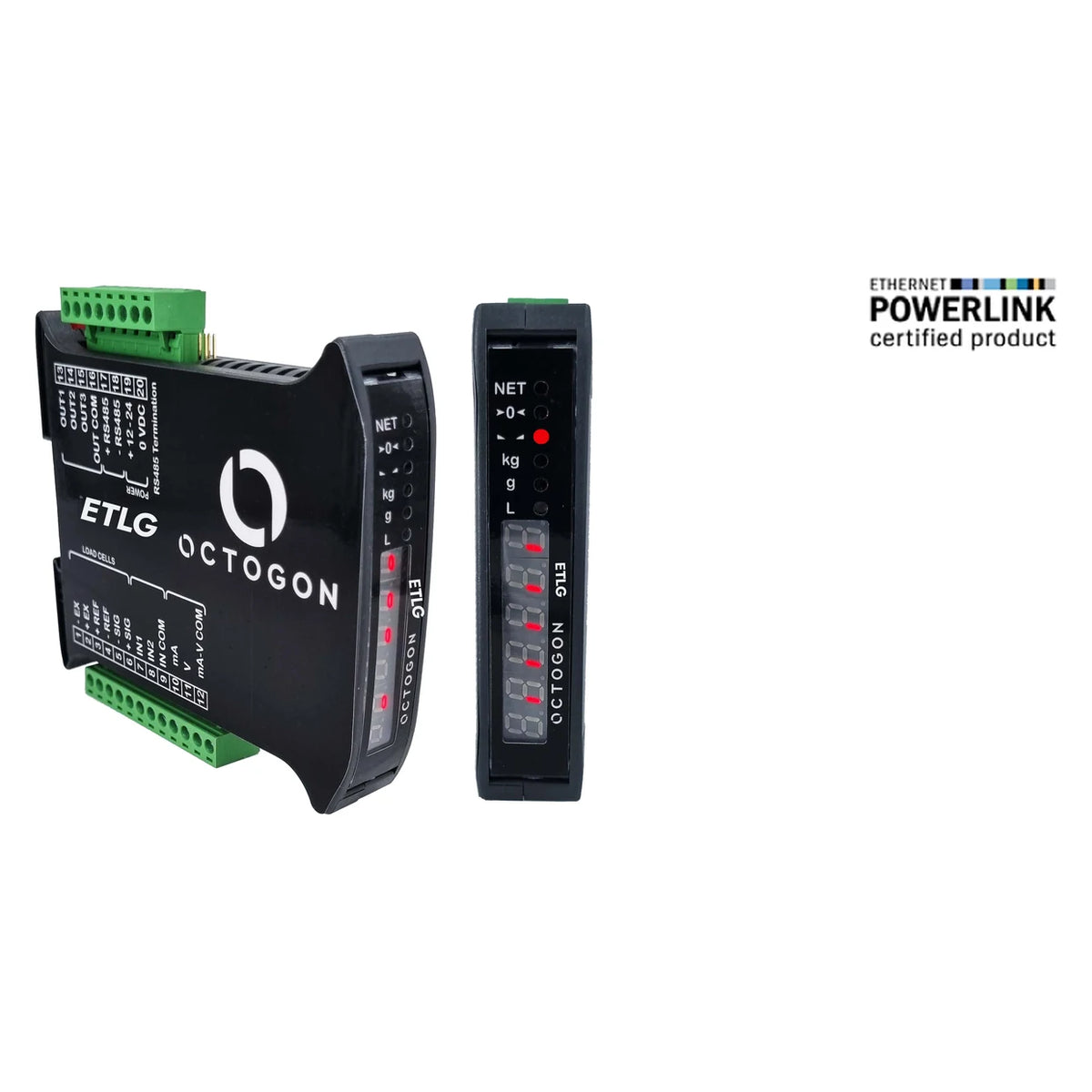


Description
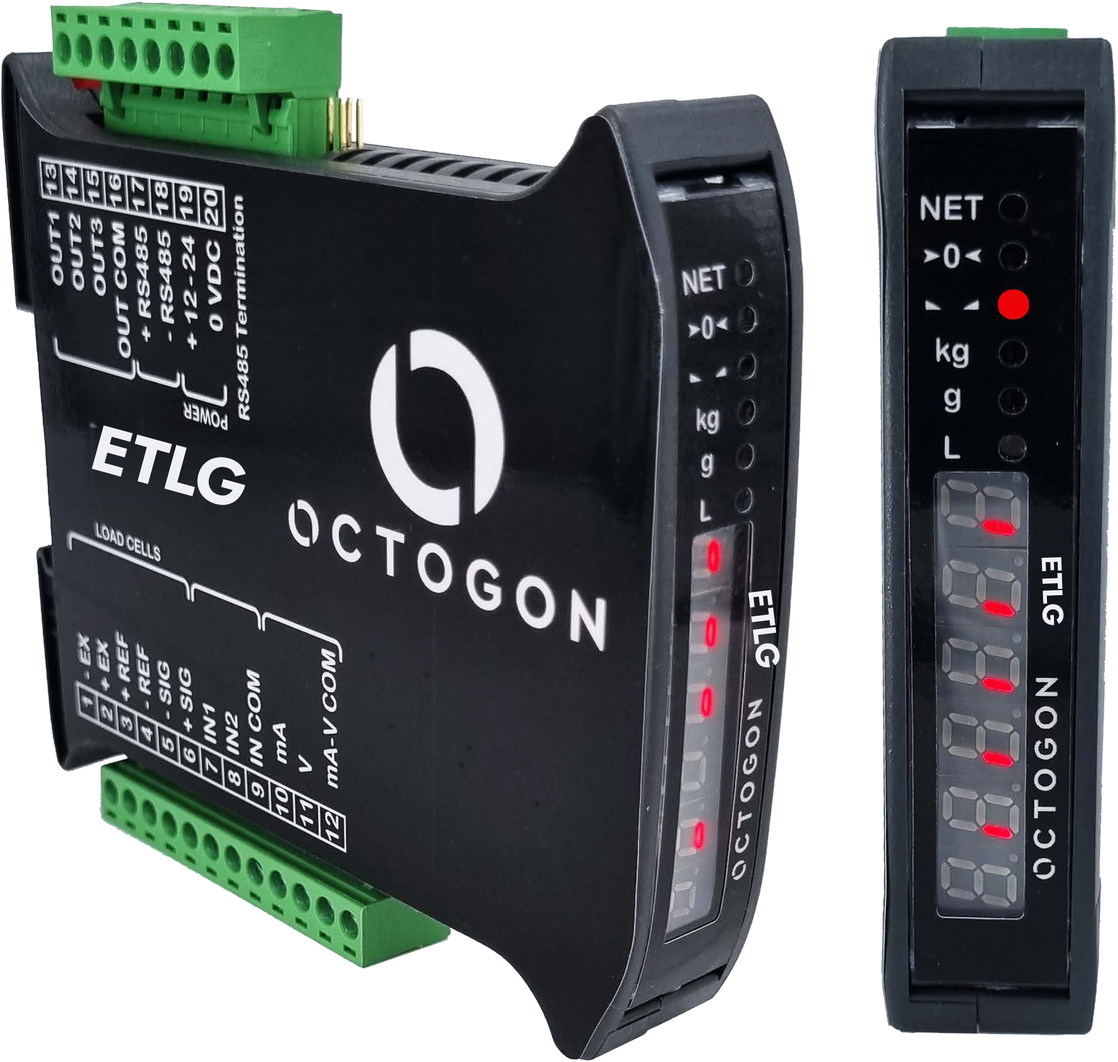
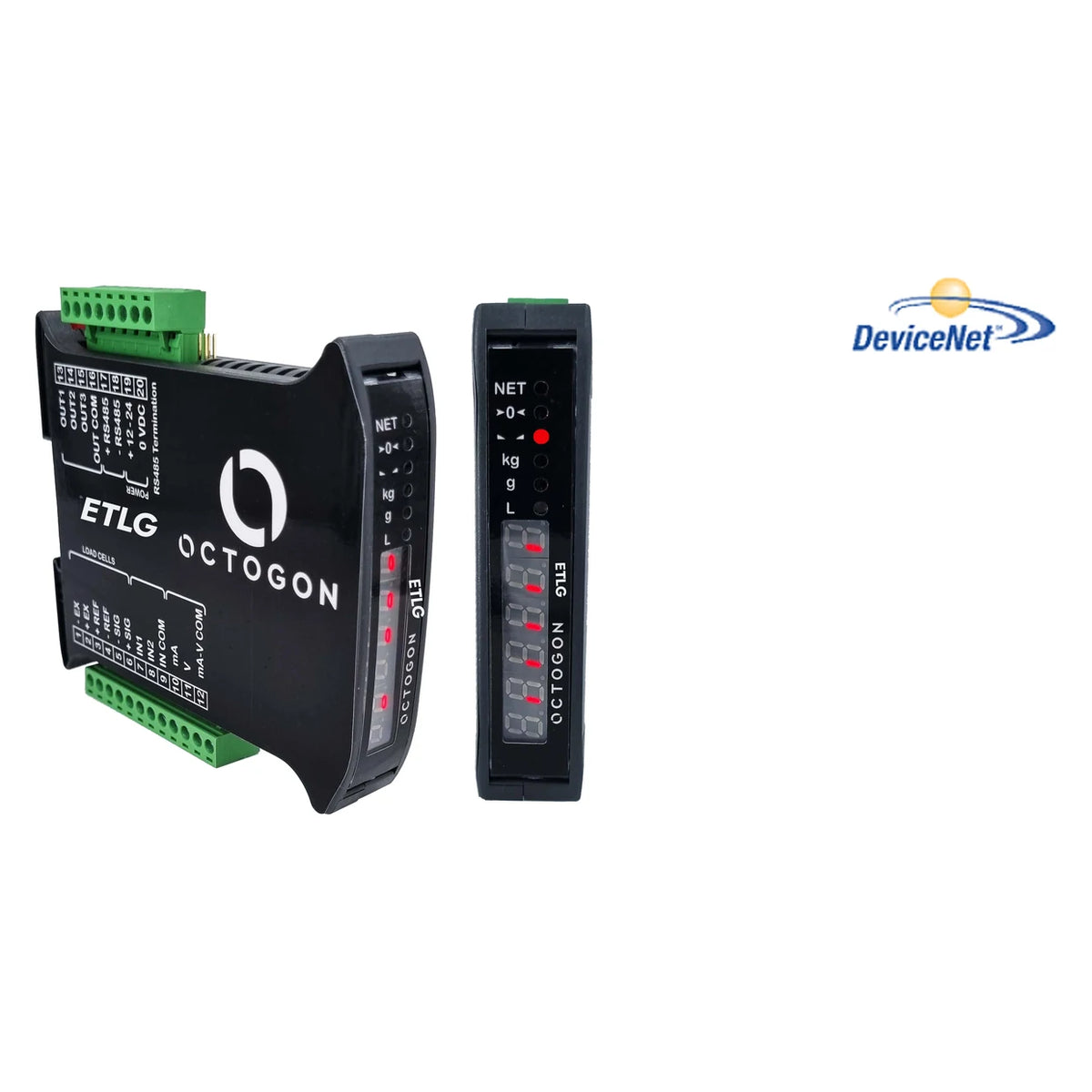
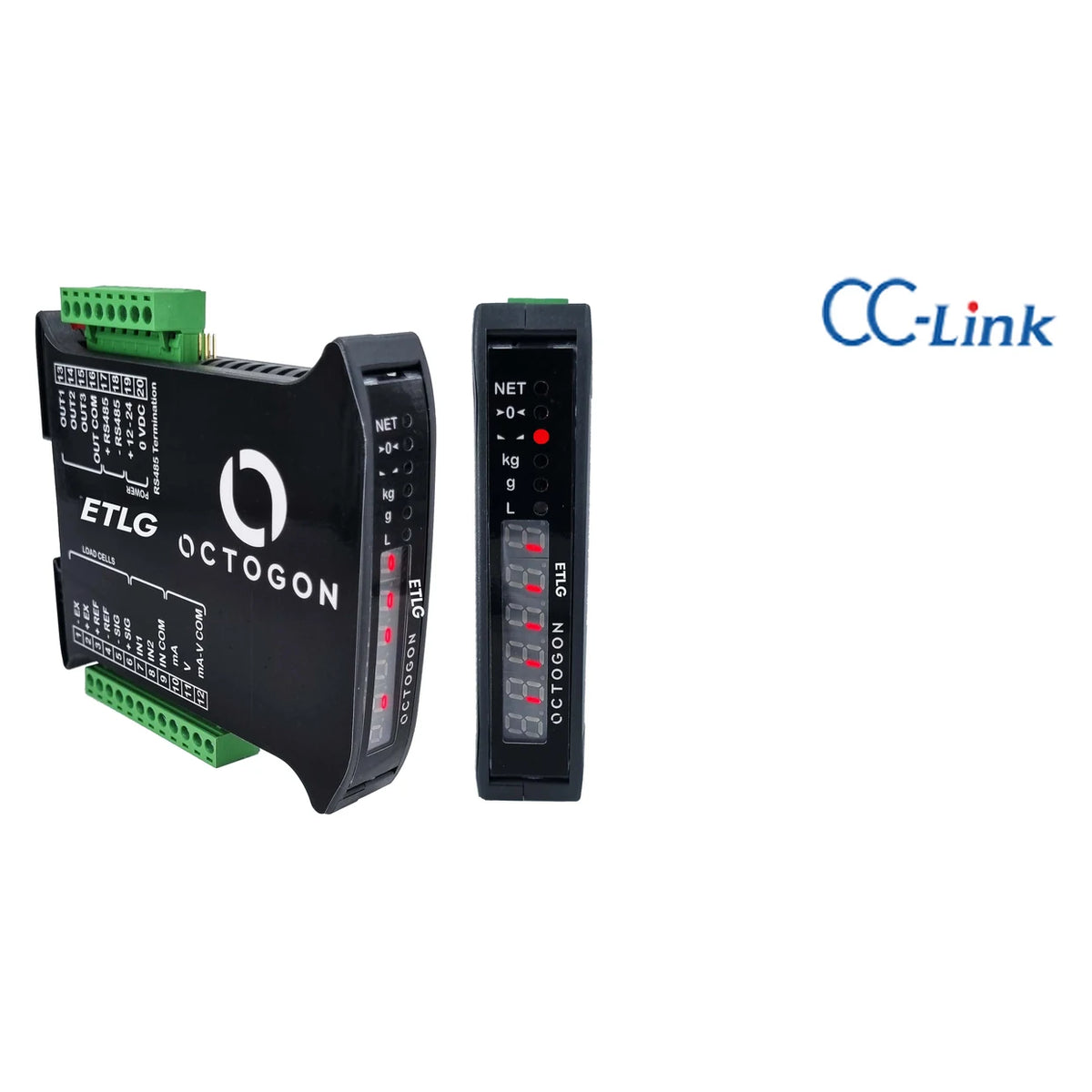
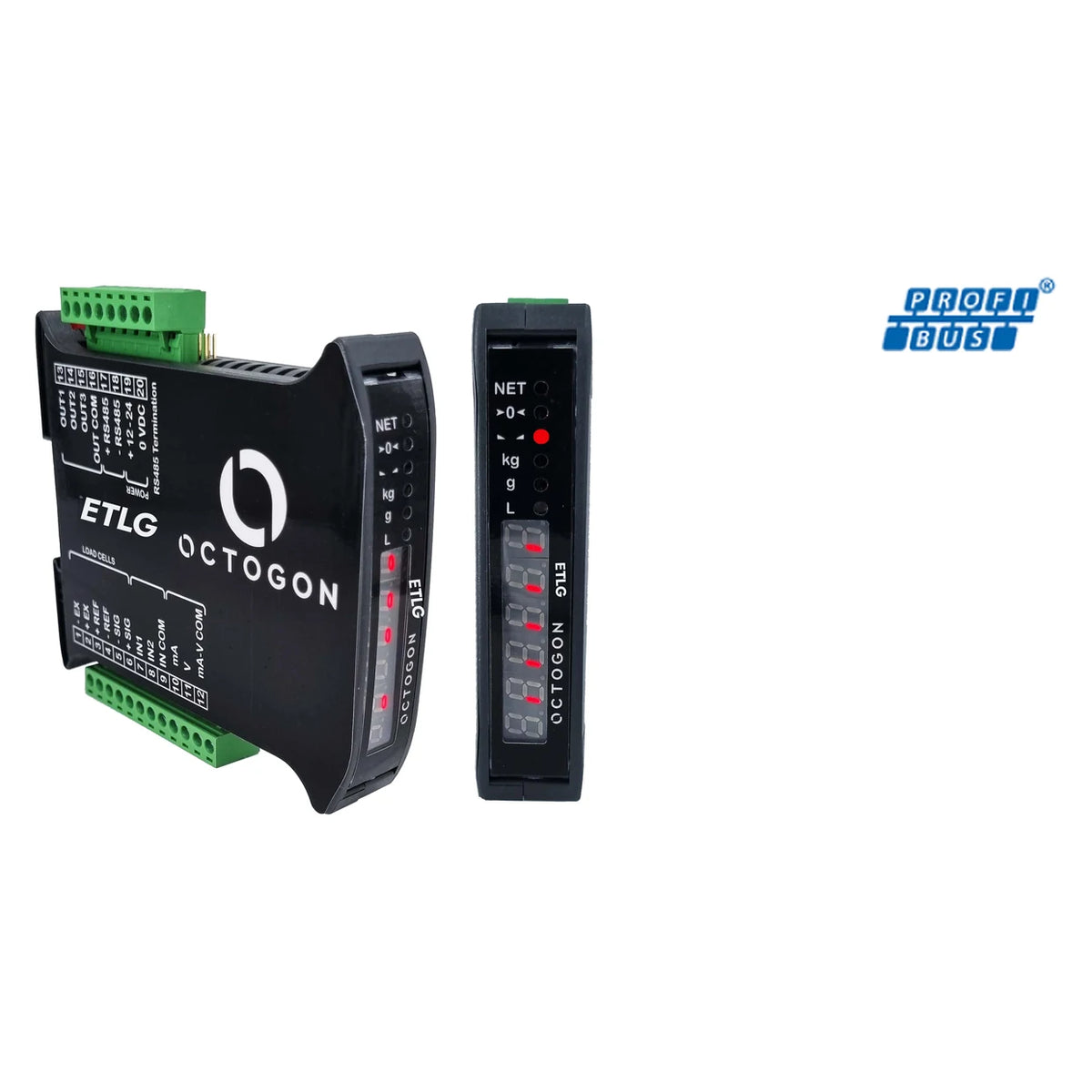
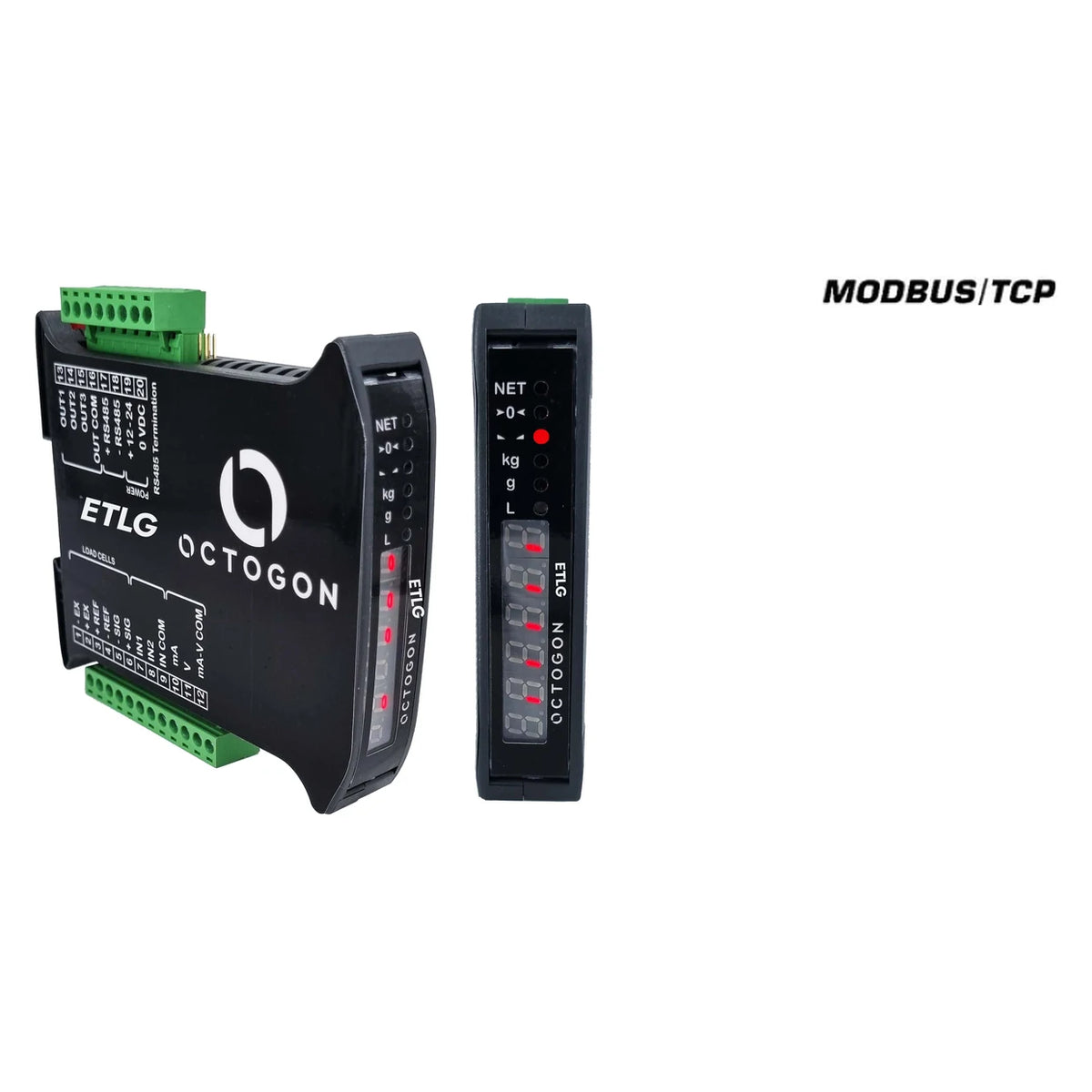
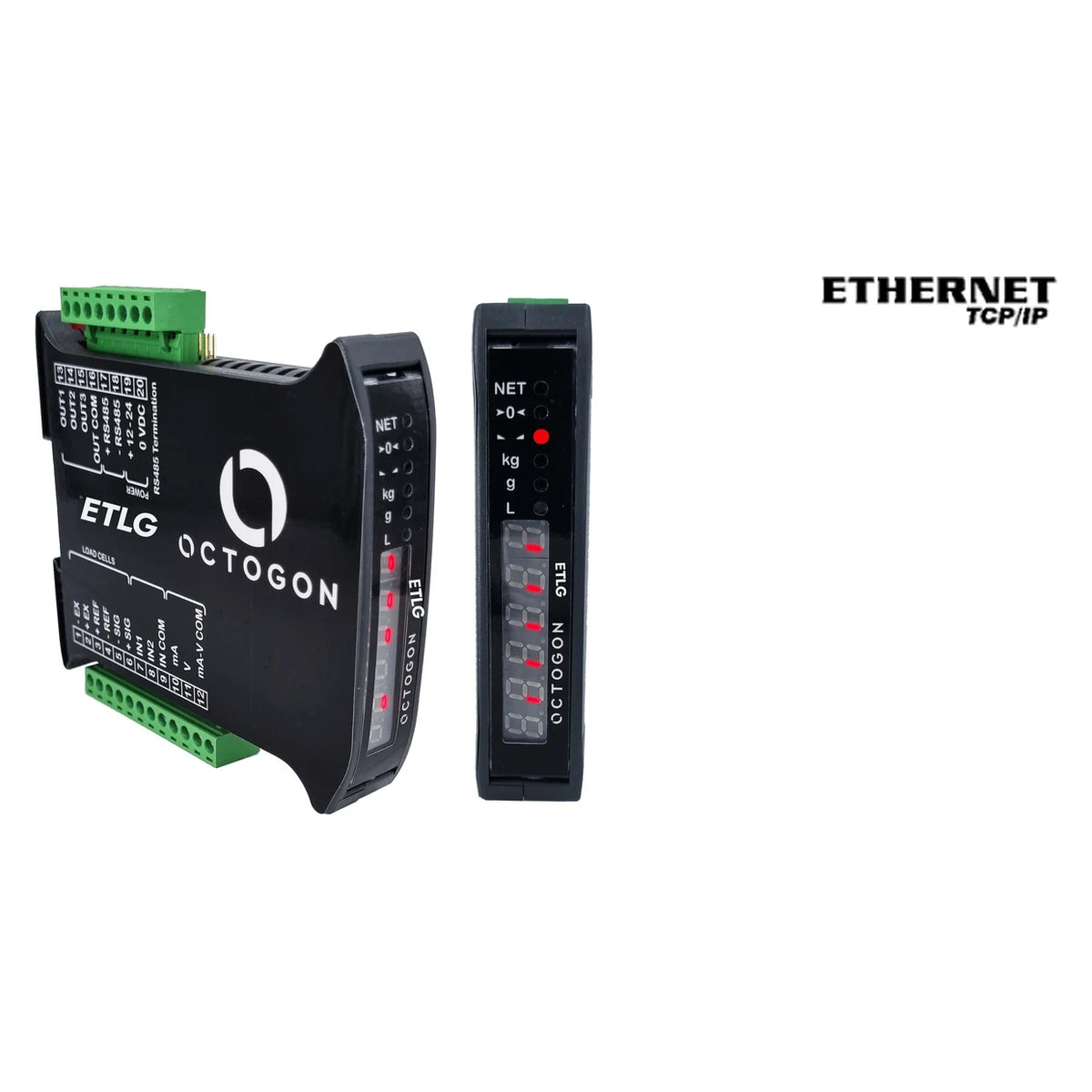
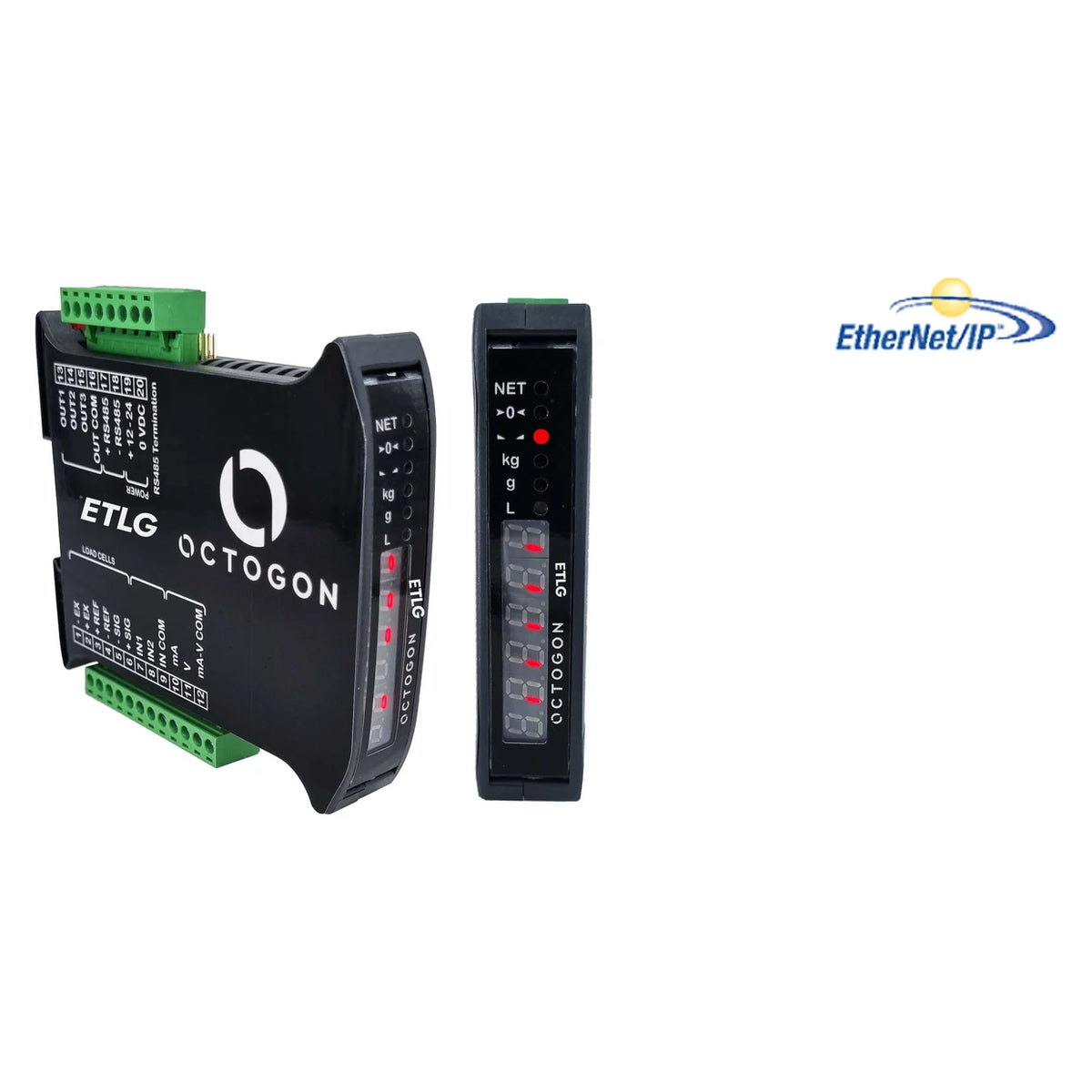
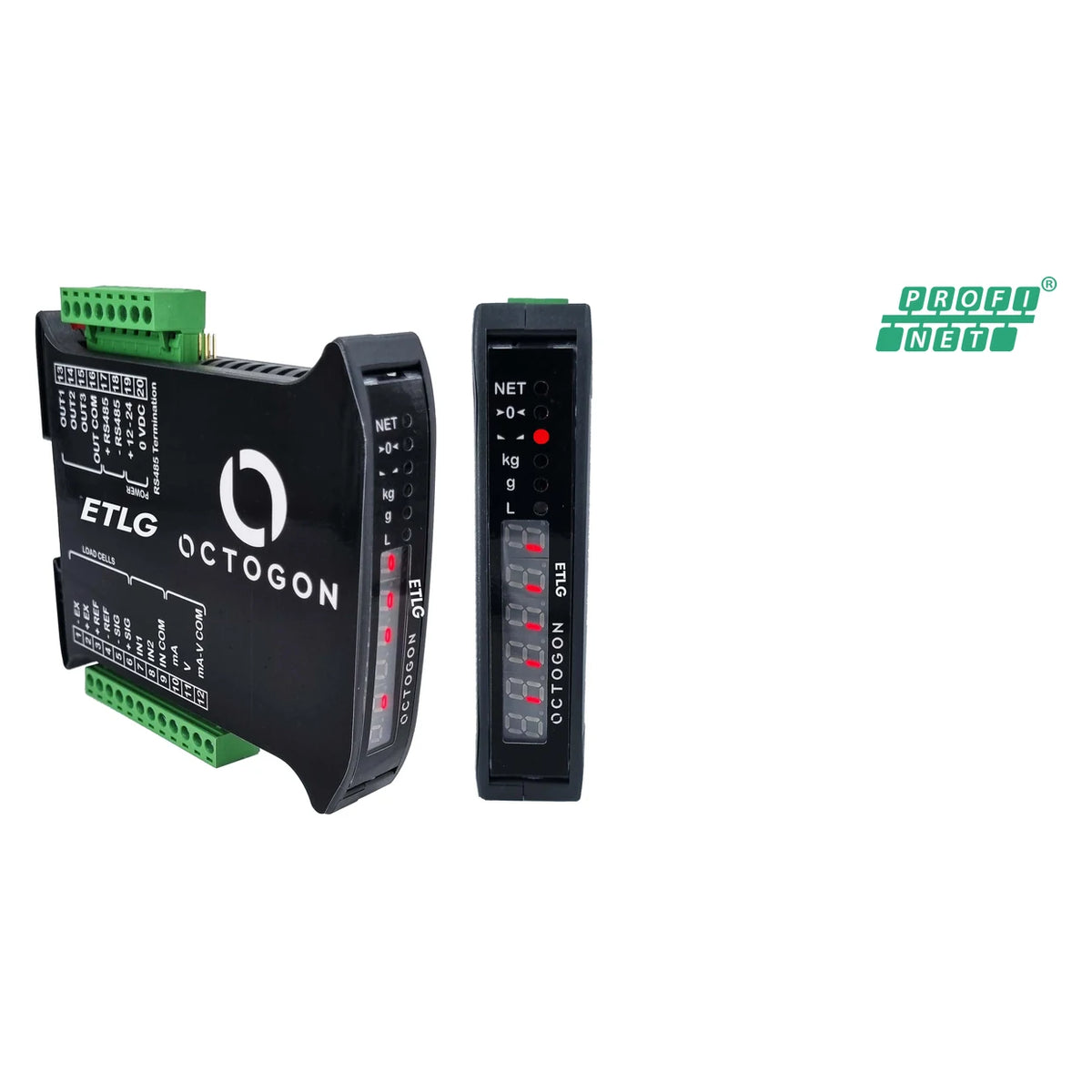
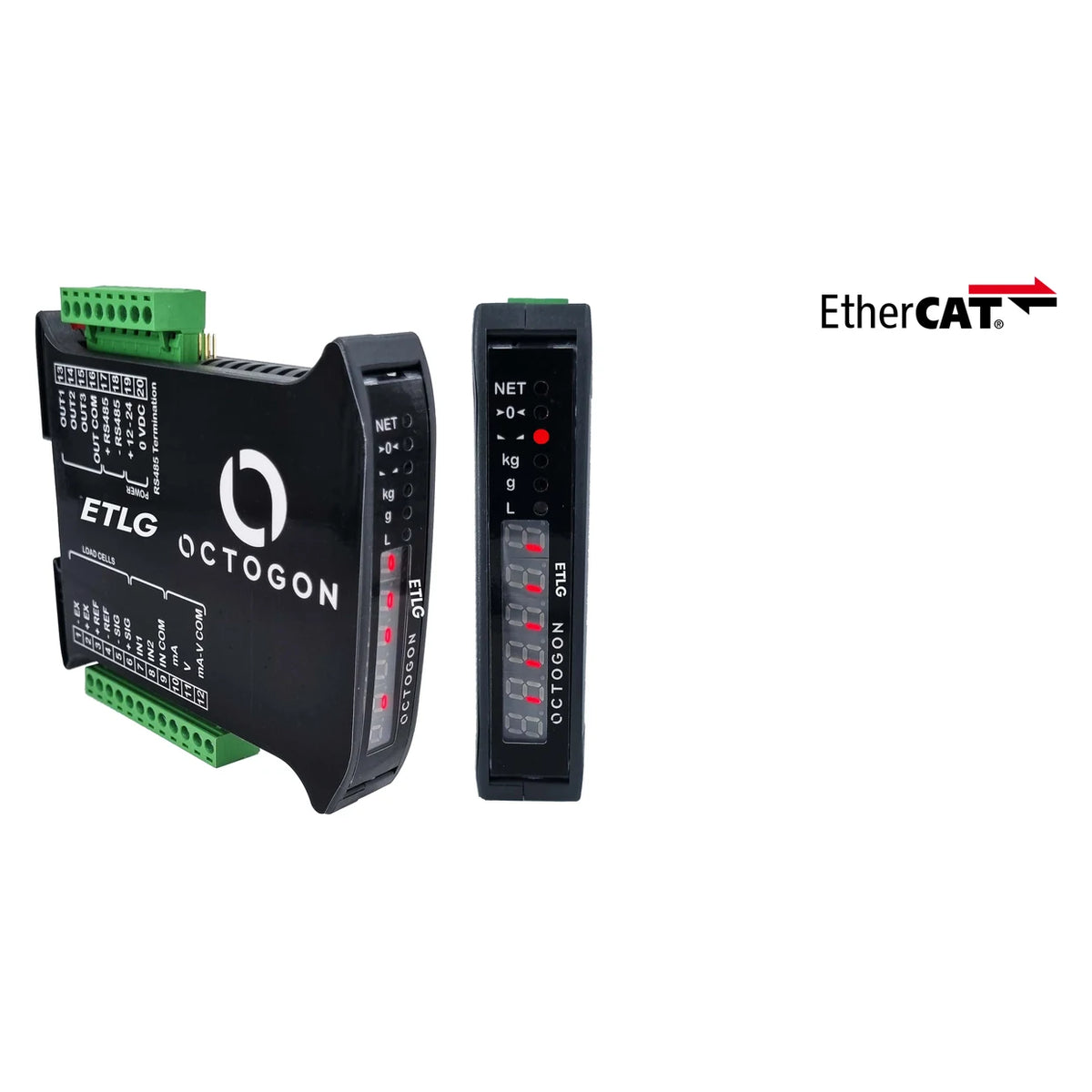
The ETLG is a weight transmitter for control cabinet mounting: it supplies the load cells, digitises their mV/V signal and passes the weight to the controller as an analog signal (mA / V) or via fieldbus or Industrial Ethernet. It is available in 13 versions, from analog and RS485 through CANopen, DeviceNet, CC-Link and Profibus DP to Modbus/TCP, EtherNet/IP, Profinet IO, EtherCAT, POWERLINK and SERCOS III. Every version also has an RS485 port.
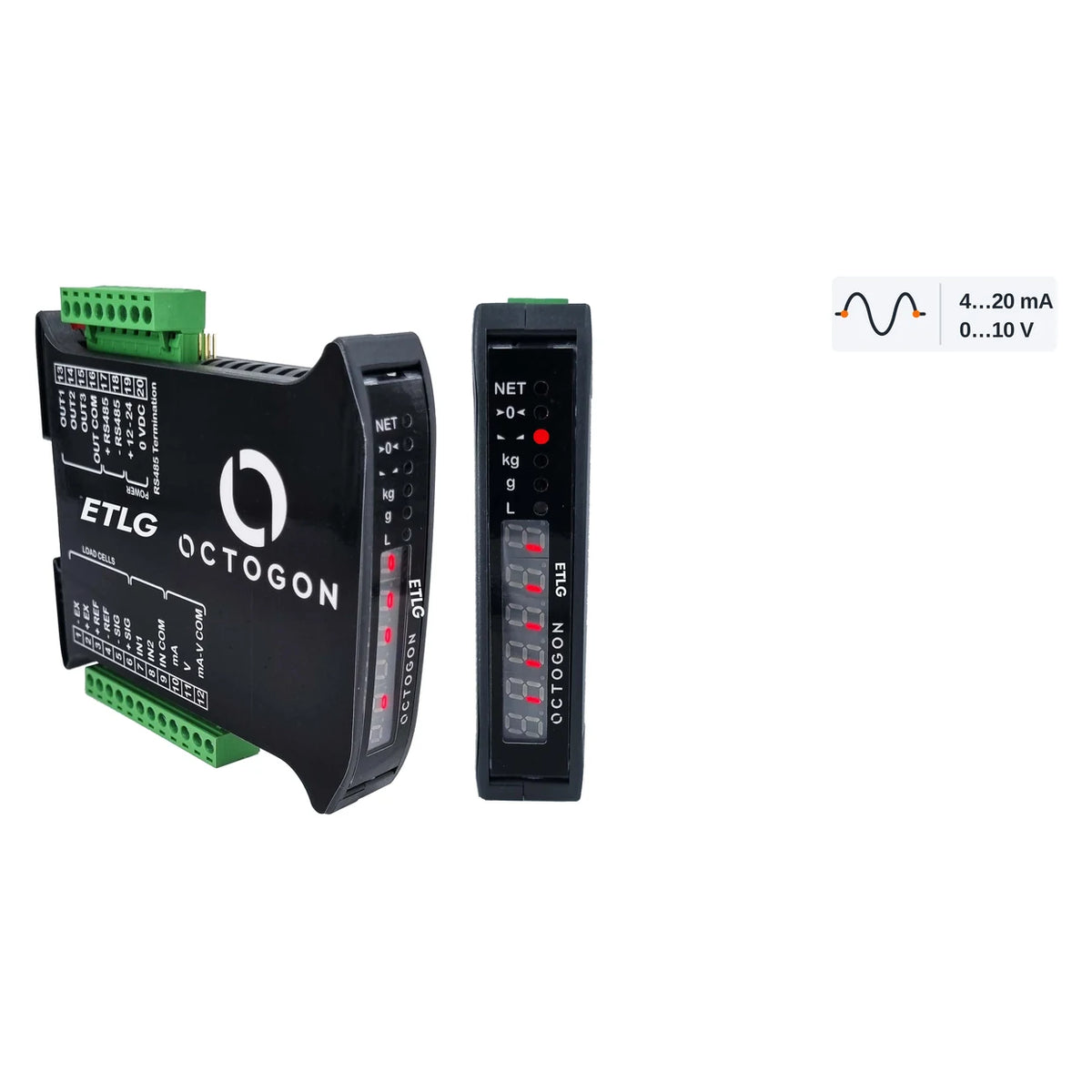
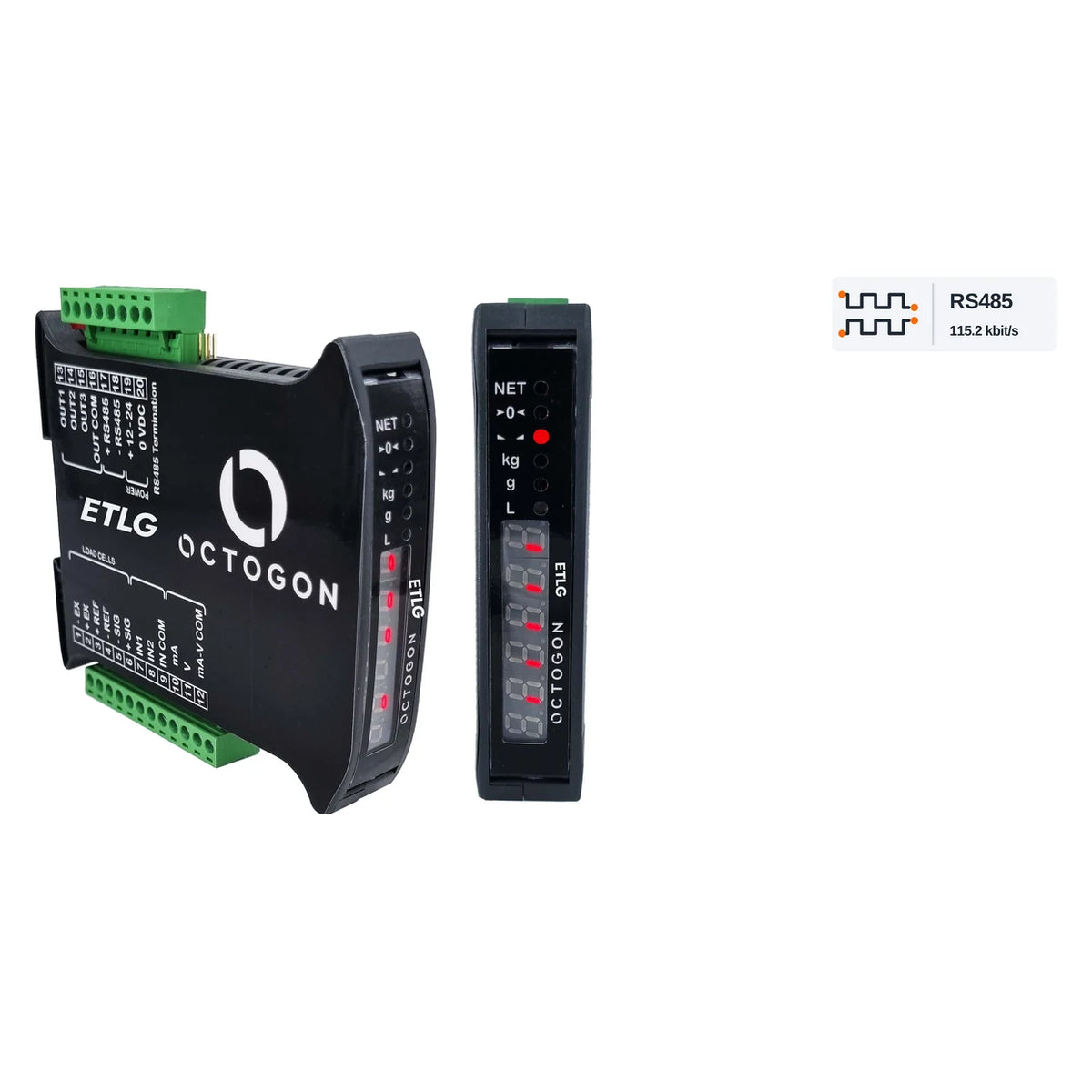
The A/D converter works with 24 bits at 4.8 kHz, with 300 conversions per second. The measuring range is ±39 mV, load cell sensitivity up to ±7 mV/V, linearity < 0.01 % FS and thermal drift < 0.0005 % FS/°C. The excitation supplies 5 VDC / 120 mA for up to 8 load cells of 350 Ω in 4- or 6-wire connection. In addition there are 3 relay outputs (max. 115 VAC / 150 mA), 2 opto-isolated PNP inputs (5 … 24 VDC) and a digital filter with 10 levels (5 … 300 Hz). The ETLG Analog version has an opto-isolated 16-bit analog output: 0 … 20 / 4 … 20 mA (up to 300 Ω) or 0 … 10 / 0 … 5 / ±10 / ±5 V (min. 10 kΩ). Via RS485 the ETLG communicates using Modbus RTU, ASCII or continuous transmission, with up to 32 instruments (99 with repeaters) and cable lengths up to 1000 m.
The slim housing measures 115 × 25 × 120 mm and mounts on the back panel of the control cabinet or on an Omega/DIN rail. It is powered with 12 … 24 VDC ±10 % at 5 W. It has a 6-digit red LED display (8 mm digit height), 6 status LEDs, 4 keys and removable screw terminals; it can also be configured with the free “Instrument Manager” PC software. The operating range is −20 … +60 °C. The ETLG is approved to OIML R76, class III, 3 × 10,000 e.
Versions
| Article number | Interface | Baud rate / type |
|---|---|---|
| ETLG Analog | RS485 + opto-isolated analog output | 0 … 20 / 4 … 20 mA · 0 … 10 / 0 … 5 / ±10 / ±5 V |
| ETLG485 | RS485 | 2400 … 115,200 bit/s |
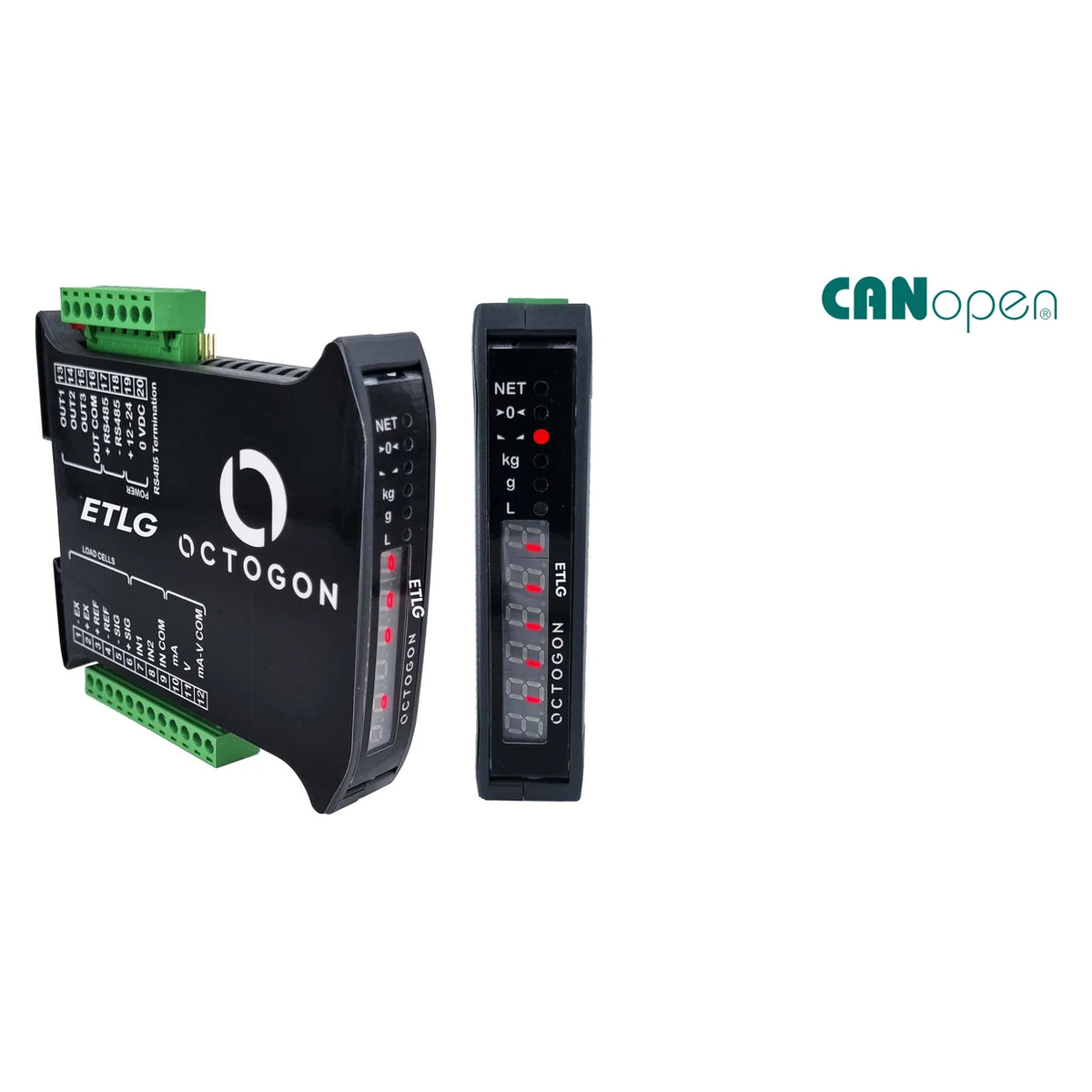
| ETLGCANOPEN | CANopen, slave | 10 … 1000 kbit/s |
| ETLGDEVICENET | DeviceNet, slave | 125, 250, 500 kbit/s |
| ETLGCCLINK | CC-Link, remote device station | 156 … 10,000 kbit/s |
| ETLGPROFI | Profibus DP, slave | up to 12 Mbit/s |
| ETLGMODBUSTCP | Modbus/TCP, slave | RJ45 10Base-T / 100Base-TX |
| ETLGETHETCP | Ethernet TCP/IP, web browser | RJ45 10Base-T / 100Base-TX |
| ETLGETHEIPN | 2× EtherNet/IP, adapter | RJ45 10Base-T / 100Base-TX |
| ETLGPROFINETION | 2× Profinet IO, device | RJ45 100Base-TX |
| ETLGETHERCAT | 2× EtherCAT, slave | RJ45 10Base-T / 100Base-TX |
| ETLGPOWERLINK | 2× POWERLINK, slave | RJ45 10Base-T / 100Base-TX |
| ETLGSERCOS | 2× SERCOS III, slave | RJ45 10Base-T / 100Base-TX |
Benefits at a glance
- 13 versions: analog, RS485, fieldbus or Industrial Ethernet
- RS485 in every version (Modbus RTU, ASCII, continuous)
- 24-bit A/D converter, 300 conversions per second
- Linearity < 0.01 % FS, drift < 0.0005 % FS/°C
- Up to 8 load cells (350 Ω), 4- or 6-wire
- 3 relay outputs and 2 opto-isolated PNP inputs
- 16-bit analog output, mA or V, opto-isolated (ETLG Analog)
- Slim: 25 mm wide, for Omega/DIN rail
- Supply 12 … 24 VDC, 5 W
- OIML R76, class III, 3 × 10,000 e