Handhelds and data loggers for strain gauge sensors and load cells
3 products
Showing 1 - 3 of 3 products
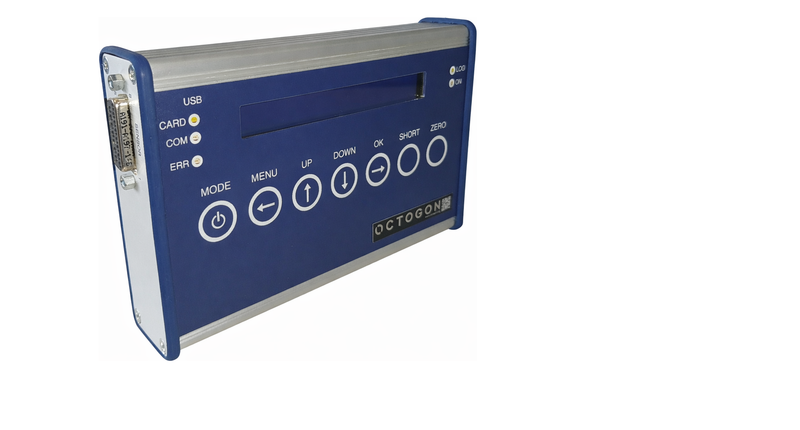
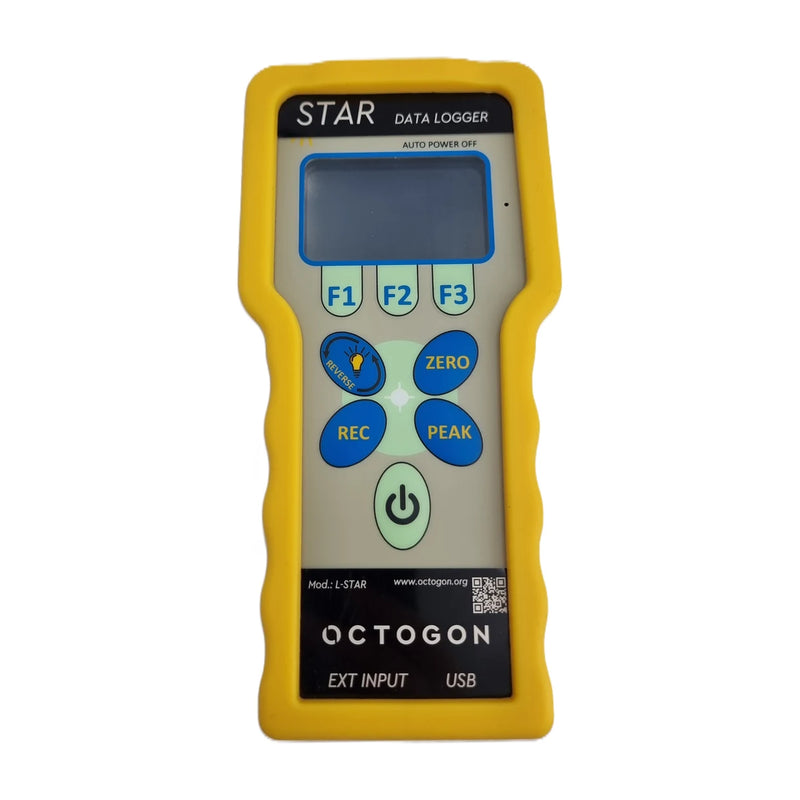
Handhelds and data loggers for strain gauge sensors and load cells are a complete measuring chain in your hand: plug in the sensor, read the value, record it. No control cabinet, no laptop, no parameterization in an engineering tool required. Versions with integrated data loggers save the history with a time stamp on an SD card. Load cells and force transducers can be connected, as well as individual strain gauges, thanks to bridge completion for 120, 350, and 1000 ohms.
Why use handhelds or data loggers for strain gauge sensors and load cells instead of a display unit?
Weighing indicators and transmitters are intended for fixed installation: they are mounted and scaled once and then run. A handheld is built for the opposite case, namely when the measuring point is different every day.
The technician takes the device and sensor along, connects, measures, documents, and packs up again. Consequently, other features count: battery operation, robust housing, quick scaling without a manual, peak value memory, and a display that is readable even in poor light.
The decisive difference: bridge completion
Most weighing devices expect a complete strain gauge full bridge, i.e., a load cell. In practice on site, however, often only a single strain gauge is available, glued directly onto the component of interest.
Devices with integrated bridge completion for 120, 350, and 1000 ohms accept exactly that: quarter bridges with standard strain gauge resistances, without you having to solder external completion resistors together. This turns any component into a measuring point, and the handheld becomes a real measuring instrument rather than just a display.
On request, we can apply the strain gauges ourselves, whether glued or welded, and supply the matching device including scaling.
Data loggers: recording without a laptop
Versions with an integrated data logger record the progression within the device to be read out later. This solves two tasks for which one would otherwise need a laptop on site.
First, unattended measurement: connect the device, let it run, and come back hours or days later. Second, documentation: instead of manually transcribed values, you get a file with a time stamp that can be added to the test report.
The most common application: troubleshooting scales
If a scale provides incorrect values, the question is always: sensor or electronics? With a handheld, you can measure the sensor's signal in mV/V directly at the junction box and have the answer in two minutes. If there are several cells under a container, you can also identify the individual defective or drifting cell without emptying the system.
The same applies to commissioning: before spending hours parameterizing a system, check with the handheld whether the zero point and characteristic value of the cells are plausible.
Further typical uses
Acceptance and load tests on hoists and structures. Testing of lifting gear, ropes, and guying. Mobile force measurements in service. Strain measurements on components to assess operational loads. Control measurements in quality assurance. Training and experimental setups, because a handheld works without infrastructure.
For some of these cases, a wireless system is the better choice, for example if the sensor is hanging on a crane hook or is moving. In that case, the handheld unit takes on the role of the receiver; take a look at our wireless measurement technology. If you prefer the smartphone to be the display unit, Bluetooth measurement technology is the more cost-effective option.
What you should look for when choosing
- Bridge types and resistances, i.e., only full bridge or also quarter and half bridge with completion
- Supply voltage and whether it matches the connected cell
- Resolution and measurement rate, suitable for static or fast measurement
- Field functions: tare, zeroing, peak value, minimum and maximum, hold function for fluctuating loads
- Scaling, either theoretically via the characteristic value and nominal load from the data sheet or in reality using test weights
- Memory and export, how many measured values and in what format
- Battery and runtime, replaceable or permanently installed
- Protection class, because a mobile device will eventually be dropped and get wet
Where the limits lie
For permanent connection to a controller, choose a weighing transmitter; for a fixed display at a weighing station, a weighing indicator. For dynamic tests with many synchronous channels and high sampling rates, universal measuring amplifiers are the appropriate class. Handhelds are not intended for legal-for-trade applications.
Sensor, device, and calibration from a single source
You can find the appropriate sensors under load cells and force transducers and in strain measurement. If you order the device and sensor together, we will deliver the combination already matched so that you measure in kg or kN and not in mV/V. On request, we can calibrate the measuring chain according to ISO 17025 in our own laboratory.
If you don't need a device but rather a measurement result, we can perform the measurement directly in your facility.